
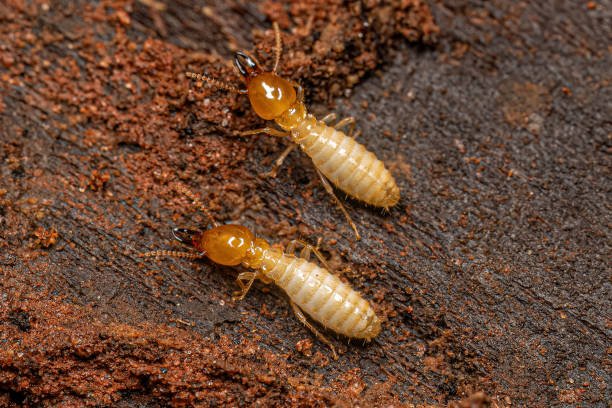
Learn to identify and manage Termites (Odontotermes obesus) in crops. Discover damage symptoms, soil management, and effective chemical control strategies.
Table of Contents
Termites: Odontotermes obesus (Termitidae: Isoptera)
In agricultural systems, Termites are a significant issue in light soils. These soil-borne pests can devastate a crop from the moment of planting, leading to poor yield and weakened plant structures if left unmanaged.
Damage Symptoms and Identification
The presence of Odontotermes obesus is often first noticed when sett germination is weak after planting. As the crop grows, the standing crop may display distinctive semi-circular feeding marks on the border of the leaves.
Key diagnostic features of an infestation include:
- Drying Shoots: The entire shoot can be pulled out easily after it dries up.
- Hollow Setts: Affected setts have a hollow interior that is frequently filled with dirt.
- Structural Failure: If disturbed, the cane falls easily because the internal rind is mud-filled.
Bionomics of Odontotermes obesus
The adults responsible for this damage are tiny, cream-colored insects with dark heads. While they resemble ants in their social structure and appearance, their impact on cellulose-rich crops like sugarcane is much more destructive.
Effective Management Strategies
To protect your crop from Termites, a combination of cultural and chemical control methods should be employed:
- Colony Destruction: The most effective long-term solution is to find and eliminate the termite colony (mound) located in or near the field.
- Sanitation: Promptly rid the field of the damaged setts and debris to remove potential food sources for the pests.
- Sett Treatment: Before planting, Imidacloprid 70 WS at a rate of 100–150 g per 100 setts should be applied to the planting material.
- Field Spraying: For standing crops or soil treatment, spray either imidacloprid 17.8 SL at 350 ml or chlorantraniprole 18.5 SC at 500-625 ml. These should be mixed with 500 L/ha of water for thorough coverage.