
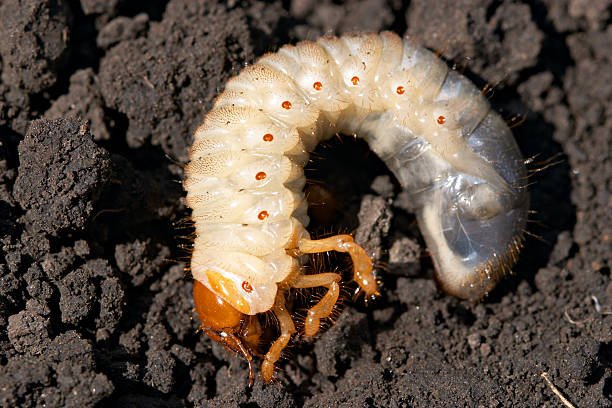
Learn how to identify and manage the Whitegrub (Holotrichia consanguinea). Discover damage symptoms, bionomics, and effective control strategies for crops.
Table of Contents
Whitegrub: Holotrichia consanguinea (Melolonthidae: Coleoptera)
The Whitegrub is a destructive agricultural pest found throughout India. This soil-dwelling insect possesses a broad host range, impacting essential crops such as maize, sorghum, and pearl millet, as well as vegetables like peppers, bhendi (okra), and brinjal (eggplant).
Damage Symptoms and Field Identification
Infestation by this pest typically manifests through the drying of the crown, which is quickly followed by leaf yellowing and wilting. In advanced stages of damage, affected canes easily come off when pulled because the larvae cause significant root damage.
During field inspections, farmers can identify the larvae as “C”-shaped grubs with a whitish-yellow color, usually located near the base of the plant clump.
Bionomics of Holotrichia consanguinea
The life cycle of the Whitegrub is closely tied to environmental conditions. During the monsoon season, adult beetles emerge. These adults are dark brown and are notably drawn to neem trees during their active periods.
Integrated Management Strategies
To protect your yield from this soil pest, implement the following cultural and mechanical management techniques:
- Resistant Varieties: Cultivate hardy plants and resistant strains such as Co 6304, Co 1158, and Co 5510.
- Light Traps: Set up a light trap in the field to draw adults in and kill them effectively.
- Irrigation Practices: Ensure consistent field moisture; do not forget to irrigate, as proper water management can deter pest activity.
- Crop Rotation: Implement a strict rotation of crops in endemic regions to break the pest’s life cycle.
- Host Tree Management: Adult beetles feeding on Neem, Ailanthus, and Acacia trees should be gathered and destroyed manually to prevent further egg-laying.